◈@charliegkwj945
What Are Kegels? Find Out Just How Kegel Workouts Aid With Urinary Incontinence
What Are Kegels? Learn Just How Kegel Exercises Aid With Incontinence Kegel exercises (frequently shortened to Kegels) are workouts that enhance your pelvic flooring muscles. These muscle mass are essential for helping regulate your urinary (peeing) and bowel (pooping) functions. They also help control sexual feature by assisting to manage blood flow to your penis, creating an erection and regulating climaxing. The pelvic floor refers to Bladder a team of muscles that support the body organs in the pelvis. This is made up of the pelvic diaphragm, which expands from the symphysis pubis anteriorly to the coccyx posteriorly, creating a hammock-like framework which sustains pelvic body organs. The pelvic floor muscles are made up of levator ani muscle mass consisting of puborectalis, pubococcygeus and iliococcygeus muscle mass, and coccygeus muscles. They might have suggestions regarding how you can enhance your method or advise a physical treatment program specifically for pelvic floor workouts that may include leisure techniques, biofeedback or hand-operated therapy. Clients that have problem executing PFME or have no enhancement with unsupervised PFME might benefit from recommendation to a continence nurse professional or pelvic floor physiotherapist (Fitz et al., 2020). PFMEs are most efficient with certain instruction by health and wellness experts and regular efficiency by determined patients. It is unclear how much health care guidance is ideal (Dumoulin and Hay-Smith, 2010; Hay-Smith et al., 2011). Both team and specific sessions seem helpful (Dumoulin et al., 2020). One problem typically come across in mentor PFME is muscle seclusion. They can be beneficial for individuals who are getting ready for prostate cancer surgery (prostatectomy) or after prostate-altering treatments to improve urinary incontinence or loss of pee or bladder control. It is normally advised that people space the workouts throughout the day, typically in 2 to 5 sessions per day to avoid muscle mass fatigue. Working out while in the prone placement is commonly suggested initially, because it is the least difficult.
What workouts should you avoid with incontinence?
High-impact workout and sit-ups put pressure on your pelvic flooring muscles and can raise leakages. To reinforce your pelvic floor to soothe signs and symptoms, change high-impact exercise, such as running and aerobics, with reinforcing exercise, such as pilates.
Workouts To Improve Bladder Control
- Urinary urinary incontinence is the loss of bladder control, or dripping pee.
- There are 139 mobile applications targeting female stress urinary system incontinence and 20 applications satisfied requirements for review (Ho et al., 2021).
- This is because Kegels are a popular way for females to enhance their pelvic floor muscle mass, which can weaken with age or due to pregnancy or childbirth.
- Equally as with regular toughness training and exercise, it is very important to routinely work your pelvic flooring so it can fully acquire, relax and operate appropriately.
- Your medical professional or nurse might ask you to keep a journal for 2 to 3 days to track when you vacant your bladder or leak urine.
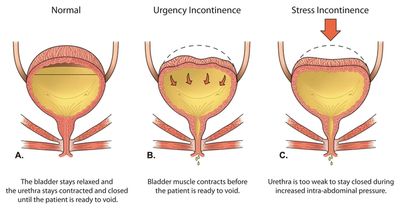
What Are The Sorts Of Urinary Incontinence That Affect Women?
As an example, if you remain in a sitting placement, you shouldn't observe your butt cheeks pressing or inner upper legs relocating together. A Kegel is a small, separated squeezing (tightening) of just your pelvic muscular tissues. This exercise should become much easier to do over several weeks, and your symptoms should slowly enhance. For instance, you need to have fewer instances of incontinence. If your lower back, stomach or head hurt after performing Kegels, you're most likely involving the incorrect muscles or holding your breath. Some medical professionals utilize an exercise prescription to prescribe the day-to-day exercise program (Newman, 2014; Newman and Wein, 2013). Adequacy of pelvic flooring muscle contraction can be assessed during the pelvic examination. Pelvic floor muscle feature is evaluated by numerous approaches, consisting of aesthetic observation, electronic palpation, electromyography (EMG), manometry, or ultrasound. Prior to PFME, an examination of the pelvic flooring muscular tissue can give valuable baseline requirement regarding toughness, coordination, and control. Visual observation can be made use of to assess a right pelvic floor muscle contraction, which is seen by perineal altitude, or a wrong tightening observed by perineal descent in females (Bo et al., 2017). The Edge score uses a 4-point range to evaluate the tightening pressure, upright displacement, Burch colposuspension and endurance of squeeze (Edge et al., 1989). 
◈